Dowd, Page 11, Evaluate estimators of risk measures by estimating their SE

TNguy5296

New Member
Subscriber
Hello everyone, I'm new and still try to orientate myself in the Forum. Therefore if this post belongs to another tag/thread, please guide me.

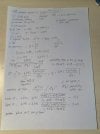
On page 11 of Dowd (Market Risk) the 90% Confidence invertal for 95% Var was calculated. I understand most of it, but I don't understand how p (bin, upper, p) was calculated. Can anyone guide me please.

Thank you.
 

Attachments

  • Market Risk VaR Seite 11.jpeg
    Market Risk VaR Seite 11.jpeg
    129.8 KB · Views: 3
  • Dowd Page 11.png
    Dowd Page 11.png
    533.7 KB · Views: 2
@TNguy5296 Great question, and don't worry, this is one of those small details that trips up almost everyone the first time through Dowd! Let me walk you through it:

What exactly is "p" here?
You're working with the binomial standard error formula for VaR, and the "p" in "Bin, upper, p" is simply the right-tail probability at the upper edge of the bin. Think of it this way: once you've chosen your bin width (h = 0.10 in the first column), your bin spans q ± h/2, which gives you:

  • Bin lower = 1.645 − 0.05 = 1.595
  • Bin upper = 1.645 + 0.05 = 1.695
Now, the next step is to ask: what is the probability of a standard normal random variable exceeding each of those boundaries? This is just a straightforward lookup of the standard normal CDF:
  • Bin, lower, p = Φ(1.595) = 94.463% — this is the cumulative (left-tail) probability at the lower bin edge.
  • Bin, upper, p = 1 − Φ(1.695) = 4.505% — this is the right-tail (exceedance) probability at the upper bin edge.
So "Bin, upper, p" is answering the question: what fraction of observations do we expect to fall beyond 1.695? From the standard normal table, that's about 4.505%. In Excel, you can compute this directly as =1-NORM.S.DIST(1.695, TRUE).

Why does the formula use this specific "p"?

The formula q ± 1.645 · √[p(1−p)/n] / f(q) uses the binomial standard error of the VaR estimator. The VaR is fundamentally a quantile — and the uncertainty in estimating a quantile depends on how many observations fall in the tail. By plugging in p = 4.505% (the tail probability at the upper bin boundary), you are capturing precisely that tail behavior in a discretized, binomial sense.

And what about f(q) — the "Probability within bin"?

This is the probability mass inside the bin, which you get by subtracting: 5.537% − 4.505% = 1.032%. That's the f(q) term in the denominator of the formula, and it plays the role of the PDF at q.

Putting it all together: the values of p you need come entirely from the standard normal table evaluated at your bin boundaries. No additional formulas, just CDF lookups. Once you have those in hand, the rest of the calculation follows naturally.

I hope that clears it up! Please don't hesitate to follow up if any step is still unclear.
 
Top